
If Something Happens To Me: This Is What You Need To Know
A practical place to organize the information the people you trust may need.
A guided workbook for recording important personal, household, financial, medical, digital, and end-of-life information so the people you trust know where to begin.
Updated Open Theory Cove edition. Amazon cover and listing details may take time to refresh after a publishing update.
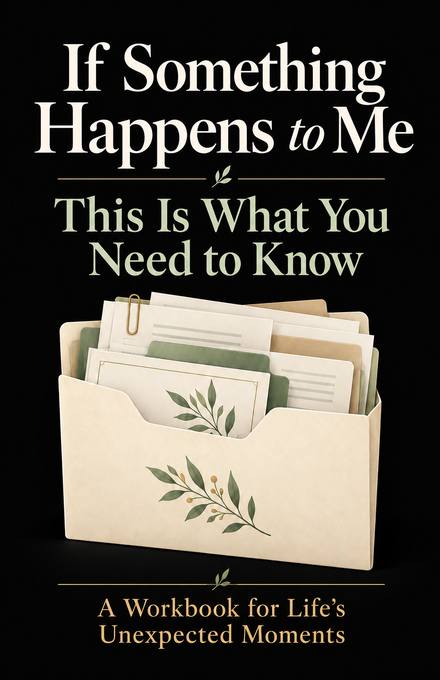
- Open Theory CovePublisher / author
- PracticalGuided workbook
- Write-inDesigned to be used
- AmazonPaperback edition
Useful information, in one place
When one person normally knows where everything is, another person can be left searching through files, phones, drawers, email, and accounts when they suddenly need to step in. If Something Happens To Me is designed to reduce that scavenger hunt. Its prompts help you record what matters, where important records are kept, who should be contacted, and the practical details that are easy to overlook because you normally carry them in your head.
The goal is not to plan for one specific event. It is to make essential household information easier for a trusted person to locate if illness, travel, an emergency, incapacity, or another unexpected situation leaves you unable to explain it yourself.
A practical workbook for people who keep life running
This workbook can be useful for anyone who manages information that another person may eventually need to find. That may include parents, couples, single-person households, caregivers, adult children helping parents organize records, pet owners, homeowners, and people simply trying to put important information in one dependable place.
Parents & households
Record the contacts, routines, documents, accounts, property details, and other information another responsible adult may need to locate.
Caregivers & families
Keep important care information, professional contacts, document locations, and practical instructions easier to find when responsibilities need to be shared.
People organizing their affairs
Create a map to important records and decisions instead of leaving trusted people to guess where information is stored.
Anyone starting from scattered information
You do not need to have everything organized before you begin. The prompts can help reveal what is missing and what still needs attention.
What information should your family know if something happens to you?
A useful emergency information binder or workbook should help a trusted person answer basic questions: Who needs to be contacted? Where are important documents? What responsibilities need attention? Which professionals, accounts, property, pets, medical details, or household information should they know about?
People, identity & important records
Identify key family members, dependents, trusted contacts, and where important identification and personal records are kept.
Medical information
Record useful health information, care documents, providers, medications or other details you choose to make available to a trusted person.
Home, property & vehicles
Note property, vehicles, valuables, household responsibilities, important documents, and practical details someone stepping in may otherwise have to discover.
Financial records & accounts
Create a guide to the institutions, records, bills, policies, and account information that may need attention without turning the workbook into an unsafe list of passwords.
Digital life
Document important online services, devices, subscriptions, digital assets, and instructions for how authorized people can find the access information you have stored securely elsewhere.
Pets & dependents
Record routines, care needs, contacts, medications, preferences, and other details that help someone continue essential care.
Legal documents & wishes
Note where wills, powers of attorney, advance directives, insurance records, and other existing documents can be found, along with personal information you want trusted people to know.
The details only you know
Capture the small but important facts that rarely appear on formal documents: who to call, where something is stored, what needs regular attention, and what another person would otherwise have to figure out.
You do not have to finish everything in one sitting
Start with what you know
Complete the easiest sections first. Use unanswered prompts as a checklist for records or information you still need to locate.
Choose what belongs in the book
Record useful information while thinking carefully about security. Avoid writing passwords, PINs, full access codes, or other highly sensitive credentials directly in the workbook when doing so could create unnecessary risk.
Make it findable
Tell at least one trusted person that the workbook exists and where you keep it. A beautifully completed book cannot help if nobody knows how to find it.
Review it periodically
Revisit it after major life changes and periodically check contacts, providers, accounts, property, pets, and document locations for information that has changed.
Why having this information together matters
The value is practical: fewer mysteries for the person who needs to help. Instead of beginning with “I don't know where any of this is,” a trusted person has a starting point. The workbook can also help you notice gaps while you are filling it out—an outdated contact, a document nobody knows how to find, a pet-care instruction that has never been written down, or an account that only one person knows exists.
It does not eliminate every question, and it does not replace formal planning. It creates an organized bridge between the information you know and the people who may someday need to find it.
Emergency information workbook FAQ
What should I put in an emergency information binder?
Focus on information a trusted person may reasonably need to locate or understand: key contacts, document locations, medical and care information, household responsibilities, property and vehicle details, financial-record locations, digital-life instructions, pet or dependent care, and the location of existing legal or estate documents.
Should I write passwords in it?
Use caution. A physical workbook can be lost, stolen, copied, or seen by someone you did not intend. A safer approach may be to identify important services and explain where authorized access information is securely stored rather than writing passwords, PINs, or complete security credentials directly in the book.
How often should I update it?
Review it periodically and whenever something important changes—for example, a move, new provider, changed account, new pet, different emergency contact, major purchase, or updated legal document. The goal is for the book to point to current information.
Is this a legal document?
No. It is an organizational workbook. It does not create or replace a will, trust, power of attorney, advance directive, beneficiary designation, estate plan, or other legal document. Questions about legal or financial planning should be handled with the appropriate qualified professional.
More help getting important information organized
What Information Should Your Family Know in an Emergency?
Our companion article turns the same problem into a practical starting checklist: what to organize, what not to put in an unsecured binder, and how to make the information useful to the person who may need it.
Read the articlePrefer a little humor with your preparedness?
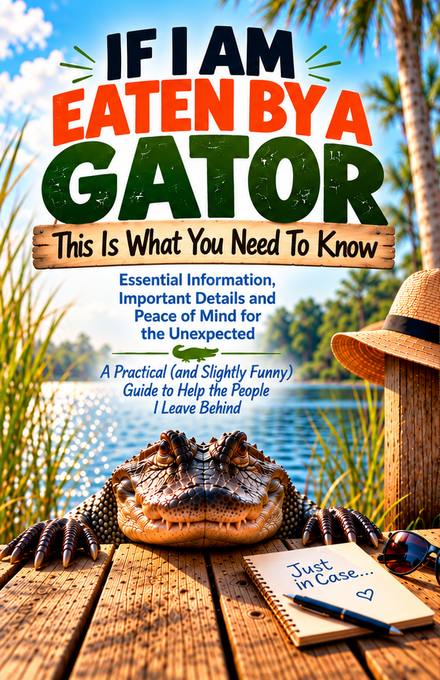
If I Am Eaten By A Gator: This Is What You Need To Know
The same practical idea approaches the unexpected with a lighter title. The updated 120-page edition combines guided organization sections with dated pages for future notes and changes.
Explore the Gator bookFrom Open Theory Cove
Books made to be useful, approachable, and worth keeping close at hand.